
 FORS Gold & ISO 9001 Certified
 Your Complete Road Plate Guide
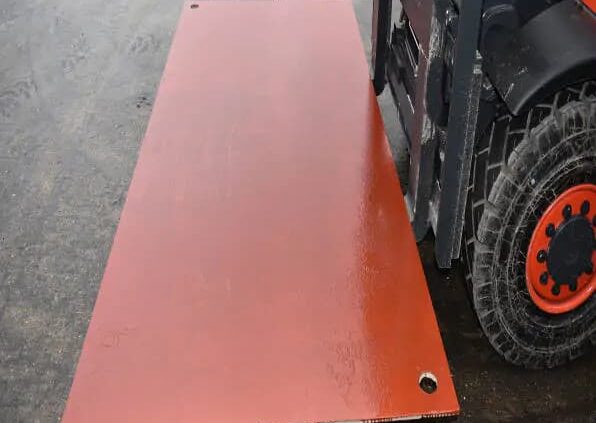
Steel road plates provide a practical, safe solution for temporarily covering excavations and holes at construction sites and vacant properties. These resilient, hard-wearing, and durable metal plates allow roads and lanes to remain open, keeping vehicle and foot traffic flowing continuously and with no disruption.
As a leading supplier of robust security and traffic control equipment, Maltaward offers steel road plates for hire or purchase across the UK. Our high-quality steel plates have been regularly sought for commercial and industrial use across construction, education, aerospace, and numerous other sectors.
Maltaward’s high-quality products and commitment to service excellence have allowed us to be a trusted steel road plate provider to hundreds of firms across the UK, with our team always happy to offer steel plate advice and recommendations pre-purchase.
Read on for a detailed guide to understanding, selecting, and installing steel road plates for your project.
What Are Road Plates?
Road plates, also called trench plates or construction plates, are heavy metal plates built to safely cover holes, trenches, or unstable ground.
These robust, heavy-duty covers are crafted from mild carbon steel and engineered to bridge open excavations and surface defects, allowing pedestrians and vehicles to cross safely while work is ongoing.
They provide a temporary, sturdy, and secure surface for vehicles and pedestrians to traverse areas where:
- Construction excavation is taking place
- Asphalt or concrete road repairs are being carried out
- Underground utility work is happening (cables, gas mains, water mains, drainage)
- Surface instability issues arise and cause safety issues
- Structural building work has created temporary blockades
- People need to find alternative, less-travelled routes into buildings or estates
Quality steel plates are constructed from thick structural steel and engineered to withstand heavy vehicle loads. They prevent site hazards, keep traffic moving with minimal obstruction, and provide solid footing for people to walk on with no fears of slips, trips, or falls.
Maltaward provides steel road plates for hire or purchase in various thicknesses and sizes to suit light foot traffic, standard vehicles, or heavy machinery. Our most popular steel road plate sizes (2500 x 1250 x 12mm or 20mm) are available for next-day delivery.
Key Applications of Steel Road Plates
Steel road plates provide critical, temporary access across a range of environments. Their most common uses include (but are not limited to):
Covering excavations and trenches: Steel road plates enable roads, driveways, and pavements to remain open during essential works by covering open excavations or service trenches. This is particularly valuable when ground disturbance cannot be avoided.
Road maintenance and repairs: Whether repairing potholes or conducting major resurfacing, steel plates allow safe passage over potentially disruptive or hazardous surfaces. This is especially helpful in high-traffic areas where closing the road would cause heavy congestion.
Utility works: Maintenance work on underground cables, gas, water, or drainage lines often requires trenches to be dug. Road plates facilitate the access and movement of personnel and vehicles as utilities are installed or repaired, preventing project delays and maintaining access throughout the work.
Event infrastructure: Public events and festivals may require temporary paths to be built using concrete barriers and steel fencing alongside road plates, which provide protection over uneven or exposed grounds. These plates ensure safe passage for attendees whilst maintaining event flow.
Heavy vehicle access: For construction vehicles and plant machinery, steel road plates create stable foundations to cross where equipment is unlikely to become stuck or damage the ground underneath. This is essential for maintaining productivity on active construction sites.
Vacant property protection: Steel plates prove handy for minimising all risks on construction sites and vacant estates, providing secure, uniform coverage over potentially hazardous openings or unstable ground.
Benefits of Buying or Hiring Road Plates
Installing high-quality road plates offers several advantages for any project:
Maintain Traffic Flow & Access
Steel plates allow roads, pavements, driveways, and parking areas to remain fully or partially open while construction work is ongoing. This avoids the need for complete closures and keeps commerce and transportation functioning, aided significantly by visible concrete barriers and metal fencing, amongst other traffic control measures.
Increased Safety
The plates create a smooth, uniform surface that protects the public from tripping hazards and open trenches. This is safer for both passing pedestrians and vehicles, providing peace of mind for project managers and site supervisors.
Prevent Project Delays
By keeping lanes and sites partially operational, projects stay on schedule without blocking access or productivity. Steel plates help construction firms avoid hefty fines stemming from the inability to meet deadlines, not to mention roadway permits or lane rental agreement terms.
Weatherproof Protection
By covering open excavations, road plates help prevent water, mud, or debris from accumulating in trenches, a key consideration for utility protection and reducing environmental hazards. This is particularly valuable in the often unpredictable UK climate.
Flexible Applications
Steel trench plates can cover excavations of assorted sizes, span uneven sections, or reinforce unstable areas. Their durability and custom sizing make them ideal for diverse applications across multiple sectors.
Steel Road Plate Sizes
Steel road plates are available in a range of standard sizes to suit different trench widths and site conditions. The three most common dimensions are:
- 1200mm x 1200mm – Best suited to smaller excavations, utility access points, and pedestrian pathways
- 2400mm x 1200mm (approx. 2500mm x 1250mm) – The most common industry size, suitable for standard longitudinal trenches and roadways
- 3000mm x 1500mm – Used for wider excavations requiring broader coverage and heavier load spans, including BAA-approved airport installations
Maltaward also offers bespoke and oversized plates up to 6000mm x 3000mm for projects with non-standard requirements. Contact us to discuss custom sizing.
Road Plate Thickness Guide
Choosing the correct plate thickness is critical for safety. The required thickness depends on the traffic passing over the trench:
| Traffic Type | Recommended Thickness |
|---|---|
| Pedestrians and cyclists | 12mm |
| Light vehicles (cars, vans) | 12mm to 20mm |
| Heavy goods vehicles (HGVs) | 20mm to 25mm |
| Plant machinery and airport use | 25mm (BAA-approved minimum) |
If in doubt, always select a thicker plate. Load capacity also depends on trench width, so consult a structural engineer if you are unsure about your specific application.
Road Plate Weight Guide
Steel road plate weight varies by size and thickness. Use the reference table below as a guide when planning lifting equipment and transport requirements:
| Size (mm) | Thickness | Approximate Weight |
|---|---|---|
| 2400 x 1200 | 12mm | approx. 270kg |
| 2400 x 1200 | 20mm | approx. 450kg |
| 2500 x 1250 | 12mm | approx. 295kg |
| 2500 x 1250 | 20mm | approx. 490kg |
| 3000 x 1500 (BAA) | 25mm | approx. 883kg |
| Steel chequer plate | 6mm | approx. 70kg |
All plates exceeding 70kg require mechanical lifting equipment. Cranes, forklifts, or specialist plate-lifting attachments should be used for safe handling and placement.
Coatings and Markings
Skid-resistant and anti-slip surface coatings provide stability in wet conditions. Additional markings, corner lifting holes, and bevelled edges are available on request to enhance visibility and safety. Pre-drilled corner holes allow for quick lifting and placement with site machinery. Custom features such as locking lift systems are available for specific requirements, such as airside or landside delivery at airports.
Installing Steel Road Plates
Proper steel plate installation is critical for optimising safety and minimising disruption. Follow these best practices:
- Use special equipment – Cranes, forklifts, and other machinery should be used to safely lift and lower plates into position. Plates are often extremely heavy and should not be manually handled.
- Prepare surfaces – Ensure the installation area is free of any debris and levelled to prevent plates from shifting or teetering.
- Inspect terrain – Validate the stability and conditions of the terrain, ensuring it can support the loads that will be imposed upon it. Road plates will typically be next to or covering a gap or excavation which may be sensitive to heavy loads and, by extension, prone to collapse. Additional loads must be accounted for in the shoring design stage.
- Check for movement – Inspect plates post-installation to assess slippage under traffic loads, addressing any imbalances promptly.
- Mark hazards – Highlight plate edges by using reflectors and coatings where applicable.
- Secure in place – Bolt plates into position to ensure greater long-term stability and to prevent misuse.
How to Secure Steel Road Plates
Unsecured road plates can shift under traffic loads, creating a serious trip and collision hazard. There are three main methods for securing steel road plates once positioned:
Pinning and spiking
High-tensile steel road pins or ground spikes are driven through the pre-drilled corner holes directly into the underlying road surface. This method is well-suited to asphalt and compacted surfaces and is one of the quickest anchoring approaches on live sites.
Bolt-down systems
Hex-head masonry fixings or specialised plate-locking bolts are drilled through the substrate and fastened tightly. This provides a more permanent fixing and is commonly used when plates are expected to remain in place for an extended period.
Securing collars
For plates with central lifting holes (typically 60mm to 80mm in diameter), a securing collar and dual-thread bolt can be used to lock the edge of the plate firmly into the ground, reducing rocking and vibration under load. This is particularly effective on busier roads.
Edge feathering (ramping)
Regardless of the fixing method used, plate edges should be feathered with cold asphalt or a ramp system to prevent trip hazards for pedestrians and to avoid vehicle jolting at the transition point.
Always ensure at least 300mm of plate overlap onto firm ground on all sides of the excavation, and check fixings regularly throughout the duration of the works.
Upholding Road Plate Safety
Correct installation is vital for road plate safety. Plates must be appropriate for projected loads, which is why it is important to consult structural engineering advice if unsure. Maltaward does not provide specific loading data specifications for supplied road plates; it is your responsibility to confirm load capacity for each application.
For your peace of mind, steel road plates at Maltaward conform to UK road and building industry standards.
Steel Road Plate FAQs
What grade are steel road plates?
Maltaward’s steel road plates are made from high-grade mild carbon steel (containing up to 0.3% carbon), engineered to be robust, resilient, weatherproof, and durable for construction and civil engineering applications. Mild steel is ductile, meaning it can be welded and shaped into various sizes without losing its inherent strength and toughness.
What thickness are road plates?
Road plate thickness typically ranges from 12mm to 25mm depending on the intended load. Maltaward stocks 12mm, 20mm, and 25mm options. Use 12mm for pedestrian and light vehicle traffic, 20mm to 25mm for HGVs and plant machinery, and a minimum of 25mm for BAA-approved airport installations.
How heavy is a steel road plate?
Weight depends on size and thickness. A standard 2500mm x 1250mm x 20mm plate weighs approximately 490kg. The BAA-approved 3000mm x 1500mm x 25mm plate weighs approximately 883kg. Steel chequer plates are significantly lighter at around 70kg. All plates above 70kg require mechanical lifting equipment.
How much weight can a road plate hold?
Load capacity depends on the trench width being spanned. The wider the trench, the lower the allowable load on a single plate. Always validate load capacity before deployment and consult a structural engineer for site-specific requirements.
What size are steel road plates?
Maltaward’s standard sizes are 2500mm x 1250mm (in 12mm, 20mm, and 25mm thicknesses) and 3000mm x 1500mm x 25mm for BAA-approved applications. Bespoke plates up to 6000mm x 3000mm are available on request.
What are steel road plates used for?
Steel road plates provide temporary covers for excavations, trenches, potholes, and surface defects during construction, utility maintenance, demolition, and high-footfall events. They allow vehicles and pedestrians to cross safely while work is ongoing.
How do you secure steel road plates?
The three main methods are pinning through pre-drilled corner holes, bolt-down systems using masonry fixings, and securing collars for plates with central lift holes. Edges should be feathered with cold asphalt to prevent trip hazards. Ensure at least 300mm of overlap onto firm ground on all sides.
Buy or Hire Steel Road Plates Through Maltaward
Businesses can buy steel road plates outright or arrange short- or long-term hire for temporary projects. Maltaward offers competitive rates, expert guidance on product choice, and next-day nationwide delivery on certain types of steel road plates. We aim to take the hassle out of access solutions for roads, infrastructure, and events.
With over 30 years of experience providing high-quality roadway protection products and professional security solutions, Maltaward is committed to meeting all of your steel road plate requirements. Our ISO 9001 and FORS Gold-certified team is always on hand to offer advice and recommendations on:
- Custom steel plate sizing and configuration
- Skid-resistant coatings
- Hassle-free delivery and collection (often next day)
- Project consultations
- Ways to make the best use of your budget and timescales
No matter the scale or complexity of your project, steel road plates ensure safe, seamless access and continuous operations. For specialist steel plate hire or purchase backed by industry expertise, rely on Maltaward. Contact us today for project guidance and a competitive, no-obligation quote.