
 FORS Gold & ISO 9001 Certified
 Steel Security Doors: Types, Grades and Standards
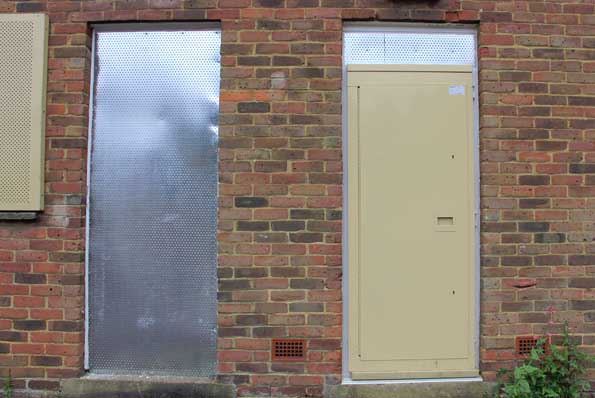
When securing vacant properties, construction sites, or commercial or public sector premises, steel doors are an essential part of upholding good security etiquette. There are numerous types of doors, however, each with their own security ratings, which is vital to understand when it comes to deciding which doors will provide sufficient security to your site.
Security standards exist to provide reassurance and peace of mind that your chosen door will perform well if an attempt to compromise your premises were undertaken. This is why understanding the various certifications and standards is important, but it’s not surprising if this feels overwhelming.
This guide breaks down the purpose of each standard, how they differ, and which rating is right for your security requirements.
The Importance of Steel Security Doors and Sitex Screens
When protecting vacant or temporarily occupied properties or construction sites with differing levels of foot traffic, steel security doors work most effectively when combined with complementary security measures.
Sitex security screens provide sufficient robust protection for window openings and non-critical access points, creating a solid security envelope. Made from zinc-coated steel with machine-perforated panels, Sitex screens allow ventilation and light to protrude inside, whilst preventing unauthorised access. Pairing these screens with certified steel doors on primary entrance points allows you to achieve layered protection that makes it more difficult and resource-intensive for forced entry, and provides a vital deterrent for opportunistic criminals.
It’s important to establish what grade of security door would be sufficient to install, however.
Understanding Security Door Standards
The UK’s various security door standards are independent certifications that test and verify a door’s resistance to forced entry. During the testing period, doors undergo simulated attacks of varying intensity using different tools, methods and timeframes.
The salient takeaway is that the longer a door withstands an attack, the higher its security rating. The higher the rating, the more likely it is, theoretically, to be able to offer comprehensive property protection. These assessments are transparent and help property managers, construction professionals, and security teams select the most appropriate product(s) for their risk profile.
It’s important to understand and navigate the various certifications, STS202, LPS1175, PAS24, and EN1627, and clarify points of differentiation to avoid uncertainty.
What is STS202?
STS202 is a UK security standard developed by Certisecure, focusing on enhanced testing for doors, windows, and shutters. Unlike basic certifications, STS202 specifies attacks using both hand tools and power tools, simulating realistic break-in scenarios from opportunistic intruders to professional criminals.
How STS202 is Graded
STS202 uses a Burglary Resistance (BR) scale from BR1 to BR6. Each level represents increasingly sustained attacks with more aggressive toolsets:
- BR1 and BR2 – Designed to resist break-ins where intruders avoid unnecessary noise, using hand tools, levers and physical force, with resistance times of 1-3 minutes.
- BR3 and BR4 – Address more calculated, determined attacks where noise is no factor. Tools tested include spanners, pliers, crowbars, axes and more, with resistance from 5-30 minutes.
- BR5 and BR6 – Reserved for high-security applications where high-value assets are at stake. Power tools are often tested with doors required to resist heavy, forceful attacks for up to 30 minutes.
For most vacant property protection and construction site security applications, BR3 or BR4-rated security doors provide a solid level of reliable protection against serious intrusion attempts whilst remaining cost-effective.
What is LPS1175?
LPS1175, administered by the Loss Prevention Certification Board (LPCB), is another widely recognised UK standard focusing on the physical resilience of intruder-resistant building components. Similar to STS202, it uses different tool kits and timeframes to assess door performance.
LPS1175 Security Ratings
LPS1175 uses Security Rating (SR) levels from SR1 to SR8. Each level corresponds to a specific threat scenario:
- SR1 and SR2 – These tests involve basic hand tools and shorter attack times (between 1 and 15 minutes), and prove most suitable for lower-risk applications.
- SR3 and SR4 – Using more aggressive tools including drills, crowbars, and sledgehammers, with resistance times extending to thirty minutes, these doors suit properties and sites with a moderate risk profile.
- SR5 and above – Doors with these ratings are designed for high-security environments, having been vigorously tested using power tools such as saws, with attack times reaching up to sixty minutes for SR8 rated doors.
In essence, the differences between STS202 and LPS1175 aren’t substantial; these standards are largely interchangeable. Both are respected door testing bodies assessing similar resistance features.
What is PAS24?
PAS24 (Publicly Available Specification) represents the baseline security standard, primarily aimed at domestic properties. Unlike STS202 and LPS1175, PAS24 operates on a simple pass or fail basis rather than graded levels.
PAS24-certified doors have demonstrated resilience to common burglary methods, such as hardware manipulation and cylinder attacks. PAS24 standards also cover non-security aspects like structural integrity and weather resistance, often providing a minimum requirement for new-build properties. It is often associated with the police-backed Secured by Design initiative.
Whilst adequate for domestic applications, PAS24 doesn’t offer the graduated protection levels necessary for higher-risk commercial or industrial premises where STS202 or LPS1175 certification would be more appropriate.
What is EN1627?
EN1627 is a European standard specifying burglary resistance requirements for construction products, including door sets. It provides classification systems for security performance but doesn’t directly address cylinder picking or electronic defeat methods.
EN1627 is typically applied to industrial and commercial premises, with some residential consideration, focusing on safe access for goods and vehicles. Whilst less common than UK-specific standards, EN1627 certification demonstrates compliance with broader European security benchmarks.
Choosing the Right Security Door Rating
Selecting the most appropriate security door depends on several factors, including (but not limited to):
- The value of assets within the property or site
- The surrounding environment and risk level
- Local crime statistics
- Site susceptibility
- Insurance requirements
As a general guide:
- PAS24 certification would suit most baseline protection needs and does satisfy UK building regulations for new-build properties.
- STS202 BR3/BR4 or LPS1175 SR3/SR4 rated doors offer an improved level of protection against heavy-duty intrusion or burglary attempts for most construction sites, vacant properties and commercial premises.
- Doors with STS202 BR5/BR6 and LPS1175 SR5+ ratings would be best suited for higher-risk sites as well as facilities storing sensitive equipment and high-value goods
It’s worth noting that whilst security ratings aren’t legally mandatory, insurers frequently specify minimum standards as a condition of cover. Always verify your insurance requirements before finalising door specifications.
UK Door Security Ratings Comparison
|
Standard |
Type | Grading System | Primary Use |
|
PAS24 |
UK |
Pass/Fail |
Domestic properties, baseline security |
|
STS202 |
UK |
BR1-BR6 |
Residential through to high-security commercial |
|
LPS1175 |
UK |
SR1-SR8 |
Commercial and industrial premises |
| EN1627 | European | RC1-RC6 |
Commercial, industrial, some residential |
Comprehensive Security Door Installation and Perimeter Protection
Security ratings only deliver their promised protection when doors are correctly installed and integrated into a wider security strategy. At Maltaward, our professional installation teams ensure high-quality and certified steel security doors are properly fitted with minimal damage to your property.
For comprehensive vacant property protection, we recommend combining certified steel security doors with perimeter security such as CCTV coverage, concrete barriers and temporary metal fencing. This layered approach creates multiple obstacles for potential intruders, significantly reducing the risk of break-ins, vandalism, and squatter occupation.
If you need assistance determining which door security rating would best suit your application(s), contact Maltaward today. Our team can provide tailored recommendations based on your specific situation and security objectives.